

In contemporary philosophy, Byung-Chul Han’s thought offers an illuminating perspective on why recovering small daily rituals can give modern life room to breathe. In his essay The Disappearance of Rituals, Han defines rituals as genuine “symbolic techniques of making oneself at home” (Einhausung).
Rituals turn our simple “being-in-the-world” into a peaceful “being-at-home”, making reality a reliable, comprehensible and protected place.
How can time become a home we inhabit?
Quoting the writer Antoine de Saint-Exupéry, Han recalls that “rituals are in time what a home is in space”. In late-modern societies, dominated by the frenzy of continuous production and immediate consumption, time has lost its reassuring structure: it is no longer a solid building to inhabit, but an unsteady flow of episodic presents rushing forward without offering any foothold.
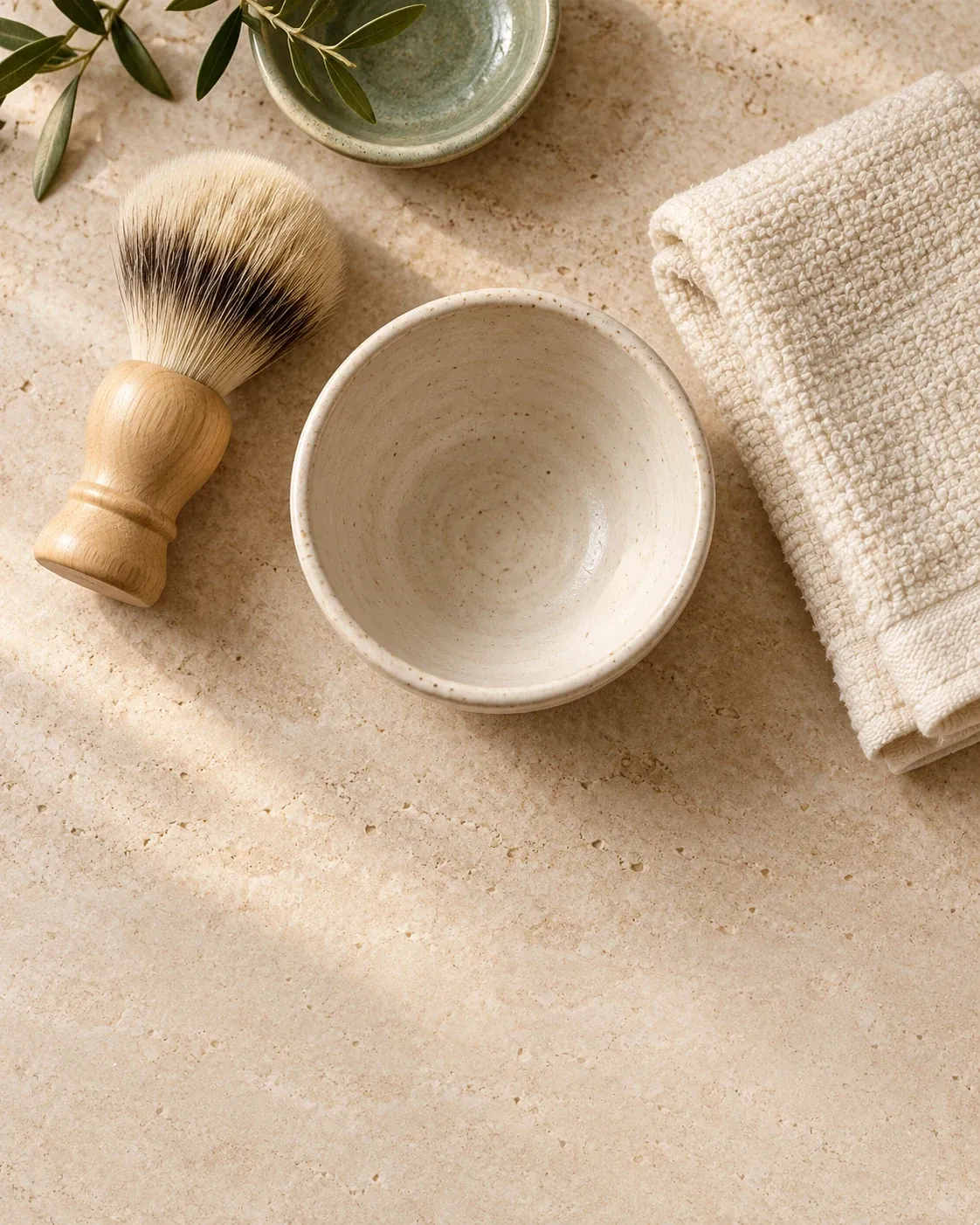
Ritual repetition — such as what we perform every morning in front of the mirror with brush, bowl and razor — reintroduces the dimension of sameness (Selbigkeit). Through the rhythmic gesture repeated in the same way, time stops scattering or consuming us like a handful of sand. Instead, it becomes a stable structure in which we can pause, linger and rediscover our identity.
Freeing ourselves from the “burden of the self”
One of the most incisive aspects of Byung-Chul Han’s analysis concerns the link between the disappearance of rituals and the spread of anxiety disorders and depression. When social and individual rituals fade, individuals are thrown back into excessive self-reference. Deprived of objective external forms on which to lean, we find ourselves encapsulated in ourselves, forced to revolve continuously around our own ego with a tormenting sense of emptiness.
Rituals act as a powerful antidote to this narcissistic short circuit:
- They depsychologise action: They shift attention away from inner agitation towards the precision of the external gesture.
- They create a saving distance from the self: They allow the mind to leave hyper-reflection behind and entrust itself to the ritual’s reassuring geometry.
- They ease the burden of the ego: They temporarily absorb and empty out psychological tension through a sequence of well-practised movements.
During traditional shaving, the mind stops questioning itself painfully and focuses exclusively on the laws of the ritual: the angle of the blade, the density of the lather, the caress of the hot towel.
The “good treatment” of things
In a world built on disposability, where objects are quickly consumed and replaced before they even wear out, rituals teach us to treat things well.
As Han observes, quoting the writer Peter Handke, the ritual act of handling our tools with care — cleaning the bowl, gently rinsing the brush, putting the razor back in its case — generates an intimate “contentment that gives wings to the heart”. The objects we live with and care for stop being anonymous commodities and become fixed points that stabilise our lives and our space.
Reintroducing this kind of attention into the ordinary morning does not mean dreaming nostalgically of the past, but claiming the right to unalienated time. Shave Therapy finds its deepest justification in this vision: transforming a mechanical action into a solemn ritual to make time a home, protect the mind and rediscover the beauty of the present moment.
Sources
This article is based on the following works in the Shaveslow Library:
– Byung-Chul Han, La scomparsa dei riti (The Disappearance of Rituals), nottetempo, 2021 (Library B023)

 English
 Français
 Italiano