

Contemporary culture is dominated by the compulsion towards authenticity and self-display. In his essay The Disappearance of Rituals, philosopher Byung-Chul Han observes how modern people are constantly pushed to produce and perform themselves, remaining prisoners of narcissistic introspection. Homo psychologicus is encapsulated in the ego; it circles aimlessly around its tangled inner life and, deprived of real contact with the outside world, ends up falling into exhaustion and depression.
Breaking this short circuit and freeing the mind from the weight of the self does not require further psychological analysis. True liberation comes through the opposite movement: shifting attention outside ourselves and resting it on the things we use, learning the art of their “good treatment”.
The lesson of ritual: joy in treating things well
Byung-Chul Han takes up an illuminating observation by writer Peter Handke about the liturgy:
“Through the Mass, priests learn to treat things well: holding the chalice and host gently, the slow cleaning of vessels, turning the pages of the book; and the outcome of this good treatment of things is a contentment that gives wings to the heart.”
When an object stops being considered a mere disposable commodity to consume greedily and is instead treated as a travelling companion to care for, our relationship with the world changes in character.
Handling the objects around us with respect externalises the mind: it frees it from the obsession with others’ judgement and personal performance, replacing the agitation of the self with a calm and profound reverence for reality.
From caring for the blade to cleaning the brush
Applied within our bathroom, the “good treatment of things” turns the minutes after shaving into a moment of genuine spiritual and manual relaxation.
When the blade has done its work, care does not stop abruptly:
- Rinsing and drying the razor: Steel (especially the high-carbon steel of traditional razors) demands attention. Rinsing it with warm water, drying it gently with a soft cloth and, if it is going to rest for a while, protecting it with a thin film of oil is an act of respect towards a metal that has served us without hurting us. The leather strop belongs before the next shave, not after.
- Maintaining the brush: Rinsing the brush in cold water to remove every trace of soap, gently squeezing it without twisting and shaking it firmly before hanging it upside down to let the knot dry creates a rhythmic and rewarding routine.
- An orderly space: Cleaning the bowl, drying the basin surround and returning each tool to its place restores order to the surrounding environment.
Why does cleaning the tools free the mind?
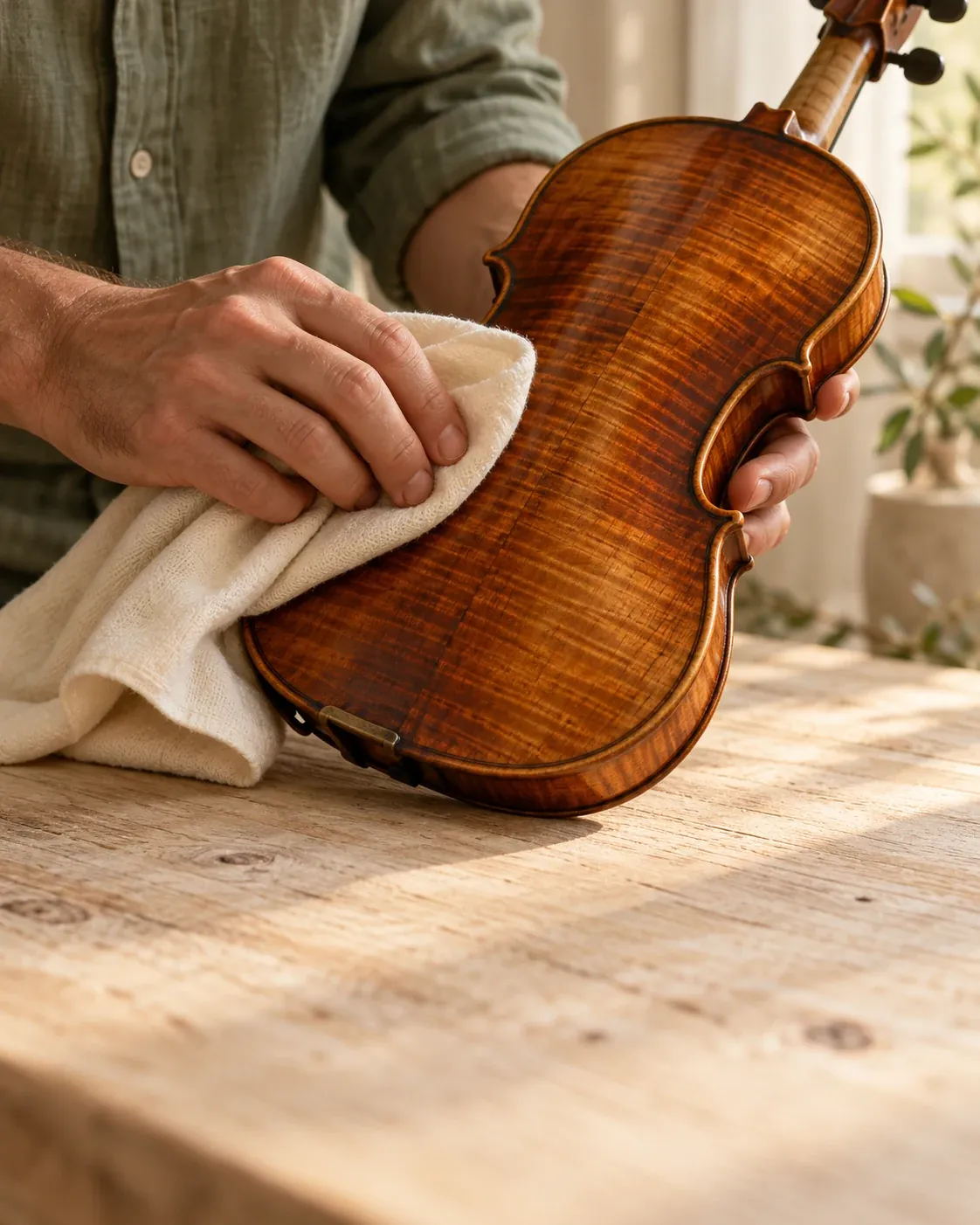
As sociologist Richard Sennett observes in The Craftsman, focusing on concrete procedures and material objects “keeps the eternal narcissistic complaint at bay”. The craftsperson cleaning a plane, the musician carefully putting away a violin or the enthusiast drying a razor’s brass head are not producing themselves to receive approval: they are simply loving their work and respecting their tools.
In this impersonal and gentle attention lies the secret of Shave Therapy: forgetting our ego for a few minutes, devoting ourselves entirely to making the brass, steel or wood of the bristles shine. And discovering that, at the very moment we care for the simple things in our hands, those same things care for us, giving us that subtle “contentment that gives wings to the heart”.
Sources
This article is based on the following works in the Shaveslow Library:
– Byung-Chul Han, La scomparsa dei riti (The Disappearance of Rituals), nottetempo, 2021 (Library B023)
– Richard Sennett, L’uomo artigiano (The Craftsman), Feltrinelli, 2008 (Library B027)

 English
 Français
 Italiano