

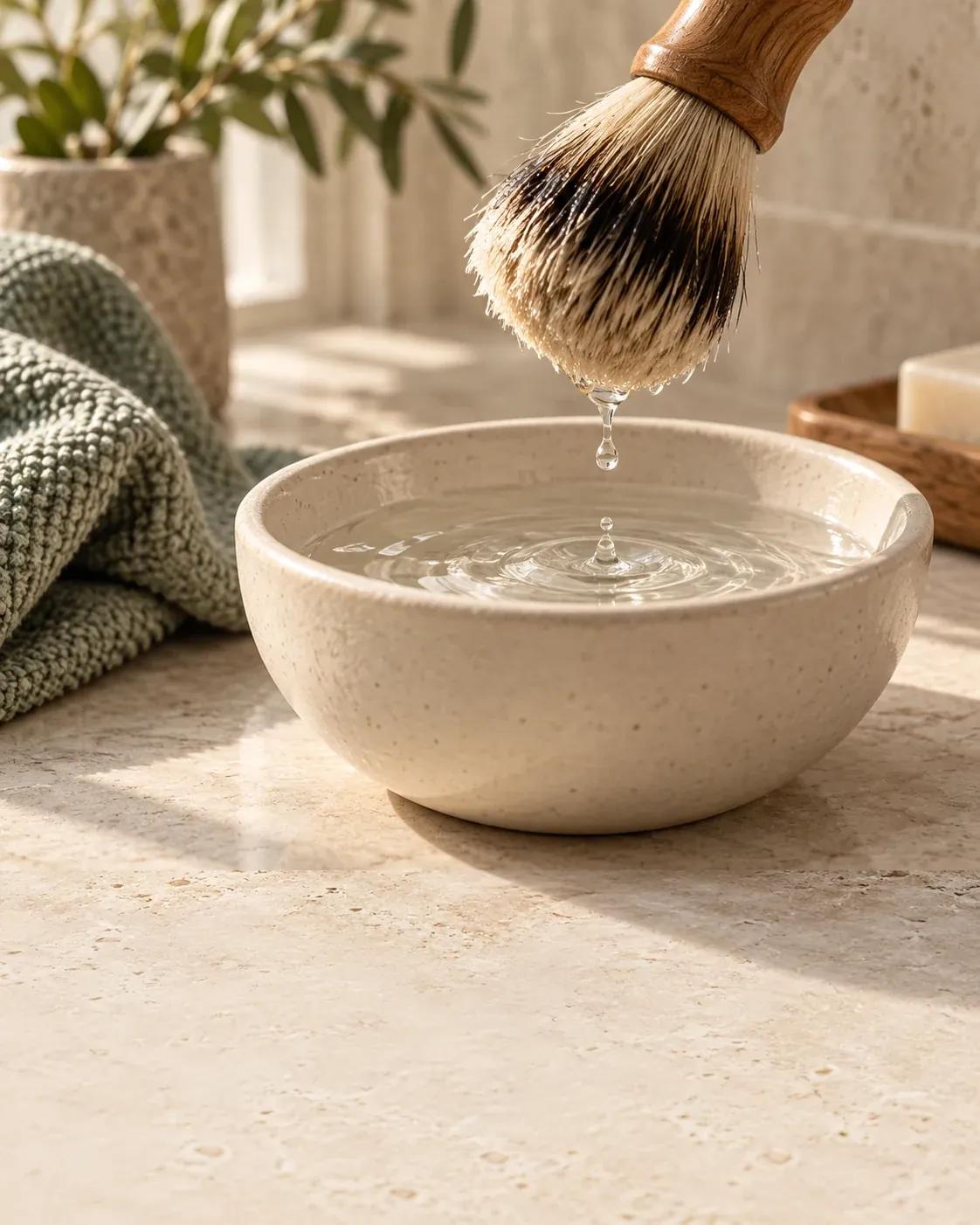
In contemporary society, hurry seems to have become a pervasive and almost unconscious obsession. American physician Larry Dossey coined the expression “time-sickness” to describe the neurotic belief that time is constantly slipping away and that we must run ever faster to stay afloat. In every area of daily life, from work management to personal relationships, we feel pressure to do everything in the shortest possible time, pursuing the explicit slogan of many efficiency manuals: “do everything faster”.
The philosophy of Slow Living, popularised internationally by essayist and journalist Carl Honoré, responds to this spiral of acceleration. At the heart of this movement is neither praise of laziness nor an obtuse rejection of technology, but the search for a profound musical and existential concept: Tempo Giusto.
What does Eigenzeit mean?
One of the most illuminating insights of the movement for deceleration lies in the German concept of Eigenzeit. Formed from eigen (“own”) and zeit (“time”), this term indicates that every living being, natural process, gesture and object possesses its own intrinsic and inalienable rhythm.
Trying to force an action’s Eigenzeit out of a sheer craving for speed means destroying its quality and beauty. As Carlo Petrini, founder of Slow Food and a pioneer of cultural deceleration, observed, slowing down does not mean being indolent or inefficient, but claiming the fundamental right to determine our own rhythms of life. Being Slow means deciding consciously when we need to run and when it is essential to slow down, freeing ourselves from the tyranny of the clock.
The music of shaving and Tempo Giusto
In classical music, the Tempo Giusto movement — led by musicians such as Uwe Kliemt — argues that performing a composition too quickly destroys its melody, hiding its most intimate expressive details. The secret of performance lies in listening to the piece’s natural beat and synchronising it with the rhythms of the human body.
The same principle applies perfectly to the shaving ritual. Trying to shave quickly, chasing the numbered minutes of a chaotic morning, turns the razor into a potential enemy, causing cuts, irritation and an immediate sense of frustration. By contrast, when we allow ourselves to explore shaving’s Eigenzeit, a small miracle occurs:
- The soap’s time: Artisan soap needs its own time to absorb water, incorporate air and become a soft, protective cream.
- The blade’s time: The razor’s passage requires a smooth, steady, pressure-free movement that cannot be rushed without compromising skin comfort.
- The mind’s time: Allowing the hands to move at their natural rhythm slows the frequency of thoughts, giving the mind a pause of genuine calm.
Remaining “slow inside”
Carl Honoré emphasises that the Slow movement does not seek to drag the world into a preindustrial utopia, but offers a recipe for finding balance in modern life. Shave Therapy’s true goal is not to isolate ourselves from the world forever, but to learn to remain “slow inside”.
When we get used to starting the day by respecting shaving’s Tempo Giusto, we build a reserve of inner tranquillity. That feeling of calm and command of time does not vanish when we leave the bathroom, but is reflected in how we face the deadlines and pressures of the hours that follow. Slowing the hand in front of the mirror thus becomes the first step towards ceasing to be slaves to the clock and finally governing our own time again.
Sources
This article is based on the following works in the Shaveslow Library:
– Carl Honoré, Elogio della lentezza (In Praise of Slowness), 2004 (Library B018)


 English
 Français
 Italiano