

In the flow of contemporary life, dominated by digital technology and hyperconnection, we are immersed in an unprecedented experience of time: the impossibility of closing. From smartphone notifications and endless social media feeds to the demands of work for constant updates and optimisation, every activity in our day seems provisional, incomplete and open.
In his essay The Disappearance of Rituals, philosopher Byung-Chul Han emphasises how the loss of traditional forms of closure causes a genuine saturation of the mind. When nothing has a precise beginning or a solemn end any longer, life stops being a meaningful narrative and becomes a frantic, additive accumulation of stimuli, fragments and information that we can never metabolise.
The negativity of closure and the shape of a narrative
For Byung-Chul Han, a ritual is essentially a closed narrative structure. A story has an opening, a development and a conclusion; it has clear boundaries that allow the mind to pause and integrate lived experience.
Without the “negativity of closure” — without the conscious gesture of putting a full stop and saying “this moment ends here” — attention jumps endlessly from one sensation to another. The inability to close our eyes and switch off turns leisure into an extension of work and production, leaving us with a feeling of perpetual incompleteness.
Rituals therefore perform a fundamental protective function:
- They create a threshold: They define a protected space and time, separate from the clamour and demands of the outside world.
- They give shape to experience: They transform a chaotic flow of events into a reassuring architecture of time.
- They offer the mind rest: They allow consciousness to empty itself of its psychological load and recover its integrity in silence.
Why is shaving a complete ritual space?
In this context, the traditional shaving ritual proves an extraordinary training ground for symbolic closure.
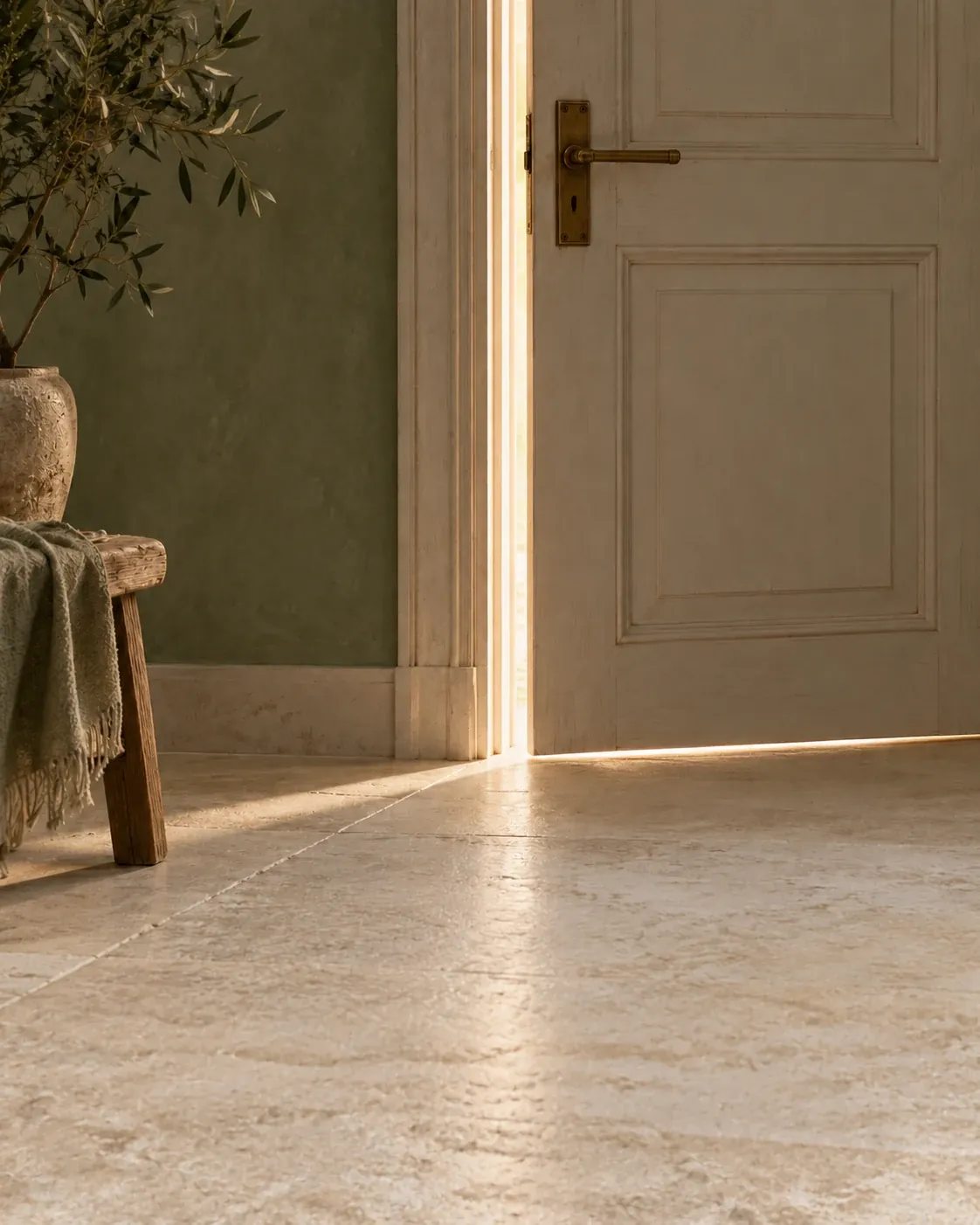
Entering the bathroom and closing the door is the first act of crossing a physical and mental threshold. From that moment, a sacred and inviolable boundary in time is established. This is not about shaving while checking the latest news on the phone or answering a speakerphone call; the presence of razor and brush demands that the outside world, with its background noise, remain strictly outside.
The entire process follows a rigorous sequence that cannot be accelerated:
- Preparation: The warmth of the water and the softening of the beard mark entry into the ritual.
- Focused action: Building the lather and the measured passes of the blade over the skin demand the full attention of the senses.
- Taking leave of the ritual: The final cold-water rinse, the caress of alum or soothing balm and the careful cleaning of the tools.
The final gesture: cleaning the tools to seal time
Perhaps the most therapeutic aspect of this ritual lies precisely in its concluding minutes. When the shave is over, care does not stop abruptly: carefully drying the brush’s bristles, rinsing the brass razor head, returning the soap to its case and cleaning the mirror are gestures of profound delicacy.
Byung-Chul Han notes that the “good treatment of things” and thoughtful maintenance of our tools generate an intimate sense of peace and fulfilment. When the final tool is returned to its place and the basin water stops running, the ritual is officially complete.
That final gesture acts as a seal: we have put a full stop to the first part of the day. We have shown ourselves that we can begin something, live each stage with care and bring it to a happy conclusion. Reopening the bathroom door and returning to the world no longer happens in defeat or overwhelm, but with the centredness of someone who has commanded their time and protected their serenity.
Sources
This article is based on the following works in the Shaveslow Library:
– Byung-Chul Han, La scomparsa dei riti (The Disappearance of Rituals), nottetempo, 2021 (Library B023)
– Hartmut Rosa, Accelerazione e alienazione (Alienation and Acceleration), Einaudi, 2015 (Library B026)

 English
 Français
 Italiano